On a quiet afternoon in the studio, a client I will call Mira stood before a blank sheet of heavy paper. She had spent months telling her story in words that felt neat, almost rehearsed. When she picked up a stick of charcoal, her hand trembled. She pressed hard, carving a black arc that tore the paper’s surface slightly. “I didn’t know it was this sharp,” she said, surprised and a little ashamed. We stayed with the feeling. She layered over the gouge with diluted ultramarine, then a thin skin of yellow that settled into the tear like sunlight in a canyon. By the end of the session, Mira looked more startled than relieved. “I didn’t plan any of that,” she said. “But it’s truer than what I usually say.”
Art therapy can do that, especially for people living with trauma. Color and shape often move faster than our defenses, and at the same time, they help us slow down. When the body carries memories that words cannot hold, images can bridge the gap. This is not about making something pretty. It is about making something honest, and learning to be with it safely.
Why pictures help when speech runs out
Trauma shatters coherence. Some people know their story by heart, yet feel numb while telling it. Others feel it all, with little language for any of it. Visual expression reaches areas of the brain involved in sensory memory, spatial processing, and affect regulation. While I avoid making big claims about rewiring the brain, decades of clinical practice show that working with images can soften hyperarousal, organize chaotic material, and create tolerable distance from overwhelming scenes.
When you mix red into blue and watch the wash become violet, you see cause and effect with your own eyes. This builds agency in a gentle way. The hand moves, the page changes, you witness it. Many survivors of complex trauma never learned that actions can produce predictable outcomes without punishment. Practicing predictable change in a low-stakes medium, a half cup of paint and a square of paper, can feel safer than tackling it in relationships right away.
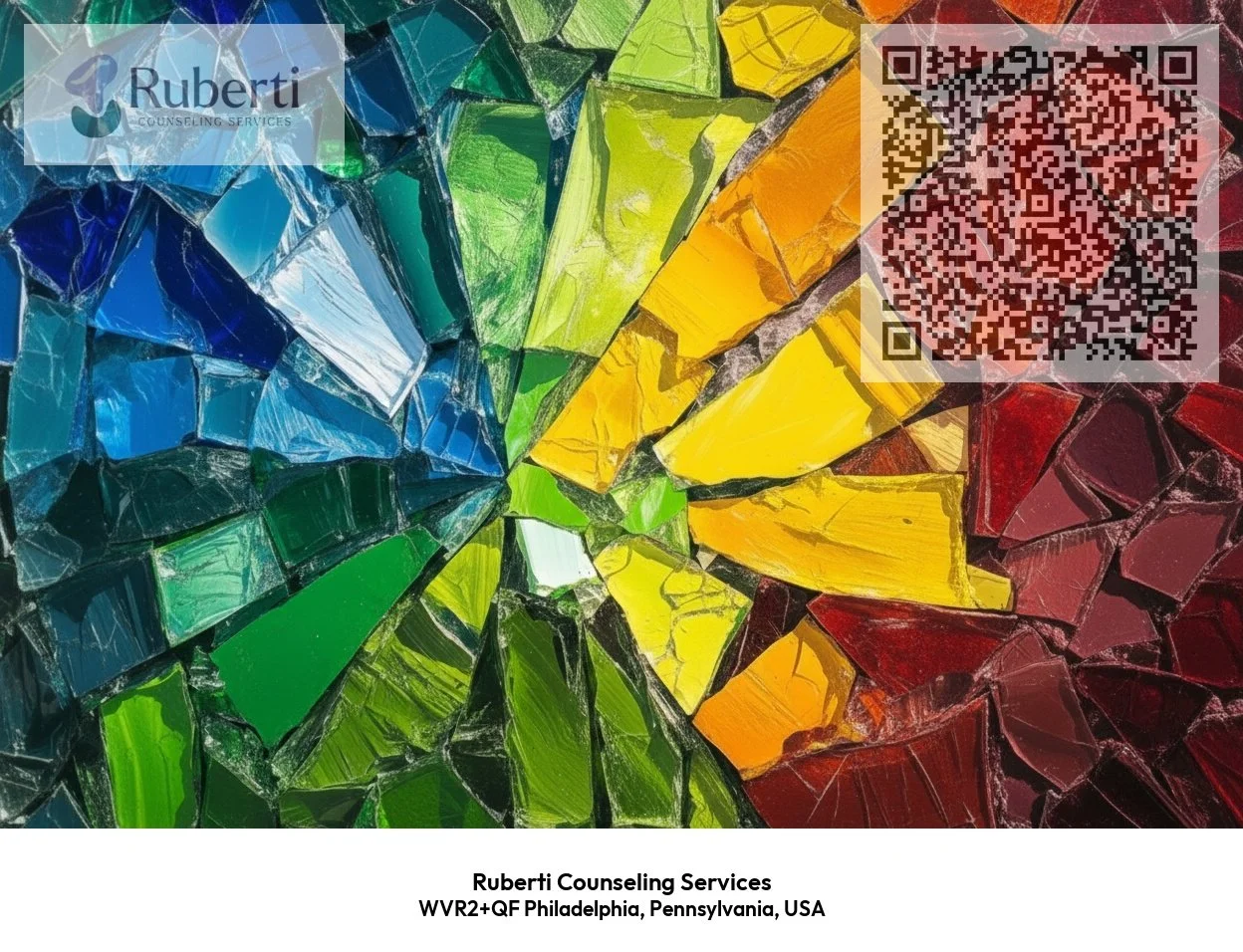
The physicality matters too. Clay pushes back. Oil pastels resist and smear. Even the small ache in the wrist after a series of tight marks delivers embodied feedback. That feedback anchors you in the present, which can interrupt the time-warps of flashbacks and dissociation.
Building the container: how the studio holds what hurts
A good art therapy studio is designed for nervous systems on edge. Surfaces wipe clean, materials are visible yet not overwhelming, lighting is bright enough to see without glare, and noises are dampened. I keep warm and cool palettes separated on the shelf. Clients who feel flooded often reach for cool hues by default, and those who feel flat can find a carefully limited warm range less threatening than a riot of options.
We talk about choice. Some days a client is invited to pick only two colors and one tool. Limitations reduce decision fatigue and free attention for the image itself. On other days, the invitation is to make three versions of the same scene at different scales or with different tools, not to correct mistakes but to notice how scale and texture shift the emotional tone.
Pacing is everything. People sometimes worry that art therapy will force them to relive trauma faster than they can handle it. It should do the opposite. We start with regulation. That might mean repetitive patterns, slow gradients of color, or tracing a simple shape with graphite until the breath steadies. I would rather spend six sessions building a vocabulary of lines than rush into narrative scenes and watch someone go numb.
Safety also means language about consent. You do not have to look at the image if looking feels like too much. We can flip the page, work on the back, or cover part of it with paper tape to create a window. I keep a bowl of water on the table for washing out color quickly. Being able to stop or dilute an image is a small but powerful way to practice control.
Color as a nervous system guide
Color is not a universal dictionary, yet patterns emerge. Clients who carry chronic hypervigilance sometimes use sharp contrasts, hard blacks against acid yellow or neon pink, with jagged transitions. Those who feel shut down may gravitate to desaturated blends or small, cramped forms surrounded by open space. Rather than interpreting colors for the client, I ask, “What happens in you when you see these reds pushing against that grey?” or “If this green could speak for you, what mood would it name?”
We experiment. One client with nightmares painted a recurring hallway in grayscale, then glazed the distance with a thin blue wash. This simple shift changed her dream, not in a magical way, but because she rehearsed approaching the scene with a different atmosphere. Another client learned to represent panic as a cluster of spiky orange marks near the top of the page. Over weeks, she practiced moving that cluster closer to the center, surrounding it with softer strokes until the composition felt integrated. The body follows images more readily than more abstract cognitive reframes.
Still, we have to watch for overreliance on soothing colors. If blue becomes the only safe place, the client can fall into avoidance. The work then becomes introducing warmer notes in small, titrated amounts, a few dots of cadmium or a streak of ochre, paired with breath and grounding, so the nervous system learns that arousal can rise and fall without catastrophe.
Integrating art therapy with other approaches
Art therapy does not live in a silo. When we fold it into thoughtful trauma therapy, it often amplifies progress. I draw regularly from internal family systems, psychodynamic therapy, and skills from somatic work, and art provides a common surface for them to meet without power struggles.
Internal family systems, with its focus on parts, adapts well to visual work. Many clients find it easier to depict a vigilant part as a symbol than to describe it. A client once painted her critic as a row of small, identical red houses lined up along the bottom edge of the paper. Each had a black square window like a watchful eye. The next week, she placed a single crooked blue house among them, taller, imperfect, with a garden. We did not need a long interpretation. The image did the talking, and the part softened.
In psychodynamic therapy, we look for themes, repetitions, and unspoken conflicts. Over months, visual motifs recur without prompting. A client might draw tall, thin trees cut off by the top of the page, implying an internal limit. Another might crowd figures to the edges, leaving a central void. These patterns often echo relational expectations set early in life. Honoring the images as both art and dreamwork keeps the process alive. We resist the impulse to pin them down too quickly with theory, yet the theories help us ask better questions.
Clients in structured trauma protocols benefit too. For those working through phased trauma therapy, art can support each phase. In stabilization, we lean on regulation practices and resource images, like a safe place drawn from imagination or memory. In processing, we set careful boundaries around traumatic material, often with time-limited exercises, then return to grounding. In reconnection, we create images about future possibilities and values, not just the past. The page becomes a rehearsal space for agency.
When food is the battlefield: art therapy in eating disorder therapy
Eating disorders often compress life into numbers and rules, with rigid control on one side and shame on the other. Art therapy loosens the grid. Not in a chaotic way, but in a way that restores sensory curiosity. Clients who measure everything to the gram sometimes find relief in mixing pigments to a color that pleases the eye rather than an exact hex code. This does not trivialize the severity of the illness. It reconnects the person with hunger for texture, temperature, and motion that does not revolve around the body’s shape.
In eating disorder therapy, images can hold ambivalence that words flatten. One client painted a bowl in tender detail, the rim chipped, the ceramic warm brown, yet left the interior a violent scribble of graphite. She could look at the image and say, “I want and I fear.” That sentence opened more doors than a dozen affirmations.
We also use food-adjacent materials carefully. Clay can be grounding, yet it may trigger contamination fears or echoes of binges, depending on the history. Paints with strong odors can evoke memories of purging or hospital disinfectant. I let clients choose tools after we name these possibilities, reinforcing that they have a say in what enters their sensory field.
Progress here is measured less in the prettiness of outcomes and more in a widening comfort zone. Can you tolerate imperfect lines without starting over. Can you sit with a mixed color that is not quite what you wanted, and stay curious. Over months, this aesthetic flexibility often mirrors growing freedom with meals and body image work.
Two small studios: stories from practice
A man in his forties came in after a workplace accident that had crushed two fingers and ended a career he loved. He said he could talk about the event calmly, and he could. His art, however, told a different story. The first sessions were full of rigid diagonals and knife-like graphite strokes that broke the paper. Over time, he experimented with watercolor pencils, a tool he had dismissed as childish. The way the color dissolved with water caused his jaw to unclench, he said, as if little by little, he could soften what had hardened around the memory. At the six-month mark, he drew a self-portrait using only wide blocks of color, no outlines. “I don’t need edges everywhere,” he laughed. He slept better after that.
A teen with a history of neglect brought a bound sketchbook and never let me see inside. We worked around the margins, literally. He collaged scraps onto the covers, stitched thread through the spine, carved little notches with a safety blade and inked them in. The book became a metaphor for privacy with communication. When he finally showed a few pages, they were not traumatic images. They were meticulous maps of imagined cities with generous parks and clear labels. He said making places where someone could find a bathroom easily felt important. That detail told me more about his early life than a hundred questions, and it guided my approach. We spent the next month designing wayfinding signs for hard days, visual cues he could follow when emotions got crowded.
What to do when art stings
Sometimes the image that emerges feels like a betrayal. A client who believes she is past her fear finds her hand drawing a trembling child. Another who identifies with fire and fight makes something faint and grey. The reflex to judge is strong. We practice staying curious, neither glorifying the image nor condemning it. If an image stings too sharply, we shrink it. Work on a sticky note instead of a full sheet. Or turn to materials that blur easily, like pastels on toned paper, so the intensity has someplace to soften.
We also name the risk of misinterpretation. Not every dark image means depression, not every large form is aggression. Context is everything. What happened the night before. What memories did last week stir up. What part of you took the lead today. The discipline here is to ask, not to tell.
Simple practices you can try at home
If you are curious about how images might help but you are not ready to seek a therapist, keep it light and focus on regulation, not trauma processing. A few practical, safe ways to start:
- Limit your materials to two or three colors and a single tool. Draw lines that match your breath for five minutes, slower on exhale, quicker on inhale. Notice if your body settles. Choose a shape that comforts you, like a circle or an arch. Fill a page with versions of it, small and large, overlapping and separate. Pay attention to the urge to make it perfect, and let yourself stop before you fix it. Keep a “color weather” journal. Once a day, lay down a two-inch square of color that captures your mood without any words. Look back after a week and see what patterns emerge.
These exercises are not substitutes for therapy, but they can help you assess whether working visually anchors you or agitates you. If images destabilize you, stop and seek professional support.
When images meet parts: IFS in the studio
In internal family systems, each part has intentions, burdens, and roles. Inviting parts to show themselves in images can be more respectful than demanding they speak. A protector might appear as heavy armor, a wolf, or something more abstract, like a wall of slate marks. Exiles, often young and hurt, might show up as empty rooms or torn fabric. We ask parts for permission before drawing them. We might offer them their own page. Sometimes we let them choose the tool. A harsh critic might insist on a hard pencil; a more playful part might want finger paint.
One session with a client who had persistent self-attack included drawing the critic as a swarm of angled arrows. We then asked, “What job are you trying to do.” The client softened when she realized the arrows wanted to prevent humiliation by keeping her small. We painted a shield for the tender part instead of trying to erase the arrows. The critic settled when it believed the shield would hold. That is classic IFS, yet the visual layer accelerated trust. The part saw that we had made a shield, not just talked about it.
The psychodynamic gaze without rigidity
In psychodynamic therapy, time moves in circles. Old patterns color the present, and the present reimagines the old. Art helps trace those circles without getting dizzy. Clients sometimes recreate early dynamics in the studio. A client who felt unseen by caregivers might make tiny drawings on large paper, then sit back as if waiting for me to strain my eyes to notice. Naming this dynamic gently opens a path to repair. I might lean closer and say, “This work asks for closeness. Is it okay if I come closer.” Consent again, but also a lived experience of being asked, not assumed.

Transference and countertransference live in color too. A client paints an image that makes me feel anxious, and I have to check if that anxiety belongs to me, to them, or to our field. Rather than blurting out my reaction, I might track it quietly and bring it in when it serves the client’s curiosity. The art externalizes our shared process, reducing the chance that unspoken projections run the session.
Measuring progress when the goal is not a masterpiece
In trauma therapy, we measure progress by regulation, choice, and integration. With art therapy, progress often looks like broader range. A client who used only black and grey now tolerates a limited color pair. Someone who ripped up images weekly starts keeping them in a folder. A person who drew walls for months makes a small doorway, then a second. The time it takes varies widely. Some shifts arrive in weeks, others in years. Patience is part of the craft.
I track concrete markers: fewer startles when a brush leaves a big mark, shorter freeze responses when an image feels risky, more spontaneous repairs rather than abandoning a piece. Outside the studio, clients report sleeping more deeply, fewer nightmares, or less impulsive behavior after stressful days. These links are not perfect, but over many cases, patterns hold.
Risks, limits, and wise boundaries
Art therapy is powerful precisely because it bypasses some of our cognitive defenses. Power requires care. People with psychosis can find unstructured visual work destabilizing if it amplifies perceptual distortions. Survivors of ritualized abuse may find certain symbols triggering even if used innocently. Those with severe perfectionism can get stuck making “good art” to please the therapist. Being explicit about goals helps. Our aim is not aesthetic success. Our aim is nervous system safety and integration.
Sometimes words must lead. If a client draws a scene and immediately dissociates, we pause, name the state, and return to orientation. Feet on the ground. Look around the room. Count five shapes by color. We might switch to a structured task, like sorting pastels by hue, or to a narrative that restores time and place. Art therapy is not all paint and tears. It is also inventory and structure.
There are times when art therapy is not the right primary modality. If someone needs acute stabilization for suicidality, if there is an active substance use crisis, or if basic needs are not met, we tend to those first. The studio should not replace medical care, shelter, or safety planning. Once stability returns, images can reenter as a supportive language.
Working alongside other clinicians
In integrated care, art therapists collaborate with psychiatrists, dietitians, primary therapists, and family systems. Clear communication prevents mixed messages. In eating disorder programs, for instance, the dietitian might notice rising avoidant patterns around https://www.ruberticounseling.com/ fats. In the studio, we can meet that trend by inviting messy materials that do not clean up perfectly, while coordinating with the primary therapist so we do not overload the client. In trauma teams, we can time deeper processing art sessions after EMDR or narrative exposure phases, or we can use art as a preparation and consolidation tool rather than a parallel deep dive.
Documentation matters. I typically photograph works with consent, label them by date, and note process elements: tool choice, pacing, points of activation and settling, client language about the image. This record helps the team see progress across modalities and prevents the image from being overinterpreted out of context.
Choosing an art therapist who fits
Finding the right clinician is as important as choosing the right materials. When interviewing potential art therapists, consider a few practical questions:
- What training do you have in trauma therapy, internal family systems, or psychodynamic therapy, and how do you integrate them with art therapy in practice. How do you structure sessions to maintain safety if intense material comes up, and what are your approaches for grounding and pacing. What is your experience with eating disorder therapy, and how do you adapt materials or prompts to avoid triggering sensory associations. How do you handle consent around viewing, storing, or sharing artwork, and what choices will I have about keeping or discarding pieces. How do you measure progress, and how will we decide together when to slow down, pause, or shift focus.
The answers should feel concrete, not salesy. You are looking for someone who respects images, honors your autonomy, and understands how trauma works in a body and a community.
A last word about making without fixing
Mira came back the week after she tore the paper with charcoal. She had taped the rip from behind, carefully, then glazed the surface again. You could still see the seam, a pale vein running through the blue. She turned the paper in the light and said, “I used to think healing meant no trace.” She shook her head, almost amused at her old belief. “Now I think it means I can look at the trace without flinching.”
That shift is why color and form matter. They show us what tolerable change looks like. They give our hands a way to learn what our minds believe only in theory. And slowly, over sessions that are sometimes quiet, sometimes raw, they help people build a life that is truer than the one that fit inside the narrative alone.
Name: Ruberti Counseling Services
Address: 525 S. 4th Street, Suite 367, Philadelphia, PA 19147
Phone: 215-330-5830
Website: https://www.ruberticounseling.com/
Email: [email protected]
Hours:
Monday: 9:00 AM - 5:00 PM
Tuesday: 9:00 AM - 5:00 PM
Wednesday: 9:00 AM - 5:00 PM
Thursday: 9:00 AM - 5:00 PM
Friday: Closed
Saturday: Closed
Sunday: Closed
Open-location code (plus code): WVR2+QF Philadelphia, Pennsylvania, USA
Map/listing URL: https://maps.app.goo.gl/yprwu2z4AdUtmANY8
Embed iframe:
Socials:
https://www.instagram.com/ruberticounseling/
https://www.facebook.com/p/Ruberti-Counseling-Services-100089030021280/
"@context": "https://schema.org",
"@type": "ProfessionalService",
"name": "Ruberti Counseling Services",
"url": "https://www.ruberticounseling.com/",
"telephone": "+1-215-330-5830",
"email": "[email protected]",
"address":
"@type": "PostalAddress",
"streetAddress": "525 S. 4th Street, Suite 367",
"addressLocality": "Philadelphia",
"addressRegion": "PA",
"postalCode": "19147",
"addressCountry": "US"
,
"sameAs": [
"https://www.instagram.com/ruberticounseling/",
"https://www.facebook.com/p/Ruberti-Counseling-Services-100089030021280/"
]
Ruberti Counseling Services provides LGBTQ-affirming therapy in Philadelphia for individuals, teens, transgender people, and partners seeking thoughtful, specialized care.
The practice focuses on concerns such as disordered eating, body image struggles, OCD, anxiety, trauma, and identity-related stress.
Based in Philadelphia, Ruberti Counseling Services offers in-person sessions locally and online therapy across Pennsylvania.
Clients can explore services that include art therapy, Internal Family Systems, psychodynamic therapy, ERP therapy for OCD, and trauma therapy.
The practice is designed for people who want affirming support that respects the intersections of mental health, identity, relationships, and lived experience.
People looking for a Philadelphia counselor can contact Ruberti Counseling Services at 215-330-5830 or visit https://www.ruberticounseling.com/.
The office is located at 525 S. 4th Street, Suite 367, Philadelphia, PA 19147, with nearby neighborhood access from Society Hill, Queen Village, Center City, and Old City.
A public map listing is also available for local reference and business lookup connected to the Philadelphia office.
For clients seeking LGBTQ-affirming counseling in Philadelphia with online availability across Pennsylvania, Ruberti Counseling Services offers both local access and statewide flexibility.
Popular Questions About Ruberti Counseling Services
What does Ruberti Counseling Services help with?
Ruberti Counseling Services helps with disordered eating, body image concerns, OCD, anxiety, trauma, and LGBTQ- and gender-related support needs.
Is Ruberti Counseling Services located in Philadelphia?
Yes. The practice lists its office at 525 S. 4th Street, Suite 367, Philadelphia, PA 19147.
Does Ruberti Counseling Services offer online therapy?
Yes. The website states that online therapy is available across Pennsylvania in addition to in-person therapy in Philadelphia.
What therapy approaches are offered?
The site highlights art therapy, Internal Family Systems (IFS), psychodynamic therapy, Exposure and Response Prevention (ERP) therapy, and trauma therapy.
Who does the practice serve?
The practice is geared toward LGBTQ individuals, teens, transgender folks, and their partners, while also supporting clients dealing with food, body image, trauma, and OCD-related concerns.
What neighborhoods does Ruberti Counseling Services mention near the office?
The official site references Society Hill, Queen Village, Center City, and Old City as nearby neighborhoods.
How do I contact Ruberti Counseling Services?
You can call 215-330-5830, email [email protected], visit https://www.ruberticounseling.com/, or connect on social media:
Instagram
Facebook
Landmarks Near Philadelphia, PA
Society Hill – The official site specifically says the practice offers specialized therapy in Society Hill, making this one of the clearest local reference points.Queen Village – Listed by the practice as a nearby neighborhood for the Philadelphia office.
Center City – The site references both Center City access and a Center City location context for clients traveling from central Philadelphia.
Old City – Another nearby neighborhood named directly on the official site.
South Philadelphia – The Philadelphia location page mentions serving clients from South Philadelphia and surrounding areas.
University City – Named on the location page as part of the broader Philadelphia area served by the practice.
Fishtown – Included on the official location page as part of the wider Philadelphia service reach.
Gayborhood – The location page references Philadelphia’s LGBTQ+ community and the Gayborhood as part of the city context that informs the practice’s work.
If you are looking for counseling in Philadelphia, Ruberti Counseling Services offers a Society Hill office location with online therapy available across Pennsylvania.